Inspired by Eiri (Worked 1789-1800)
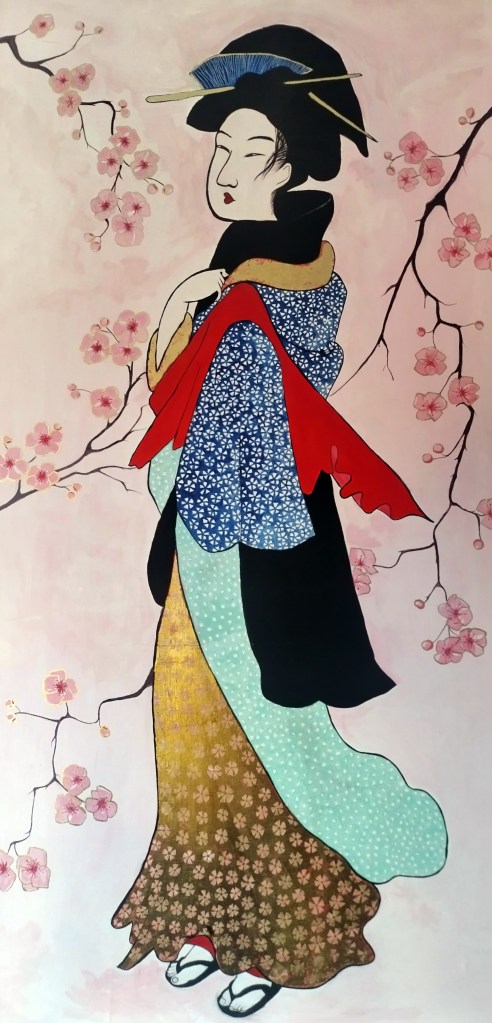
This is a mixed media on board! 4ft x 2ft- Acrylic, Oils and Goldleaf! and forms a pair with the ‘Welsh Lady!
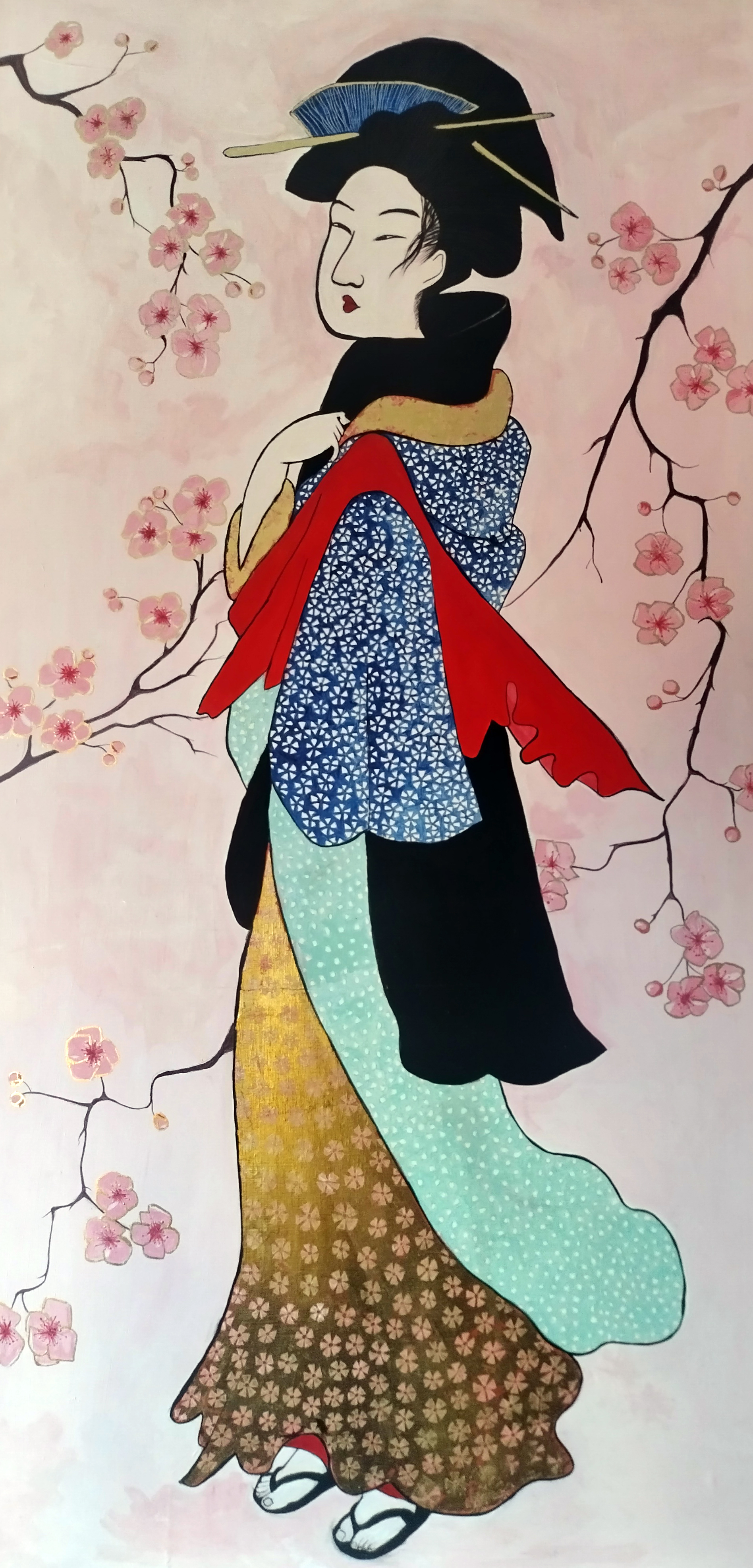
The Geisha
This is a mixed media on board! 4ft x 2ft Acrylic, Oils and Goldleaf! mounted in a black frame. Collection in Person or Postage will be an additional cost, depending on where the item has to be delivered to!
£500.00
The Japanese word geisha or geiko literally translates “art person,” professional women who entertained men; singing, dancing, and playing the samisen a three stringed instrument! They were adept at flower arranging, performing the tea ceremony, calligraphy and communication!. They wore white face makeup because it looked better in the light, particularly if they were to perform to or entertain nobles. In the dim candlelight, wearing thick white makeup created a porcelain look!
The difference between Geisha and Maiko
Geisha means the person of arts and Maiko means ‘the child who dances‘ The word gei in geisha and gei-ko refers to performing arts. Sha and ko means a person. Mai means ‘dance‘ in Japanese, and –ko in this context refers to a child making a Maiko a geisha/geiko’s apprentice! they must live in an okiya (geisha house) with a geisha mother for five years of training.
Where does the geisha culture survive?
“Geisha can be found in several cities across Japan, including Tokyo and Kanazawa, but the former capital of Kyoto remains the best and most prestigious place to experience geisha, who are known there as geiko. Five major geiko districts (hanamachi) remain in Kyoto. Four of them, Gion Kobu, Gion Higashi, Miyagawacho and Pontocho, are located in or around the Gion district in central Kyoto, while the fifth, Kamishichiken, is located near Kitano Tenmangu Shrine.”

A maiko and two geiko during a dance performance at an ochaya in Gion
 Pethau Bach